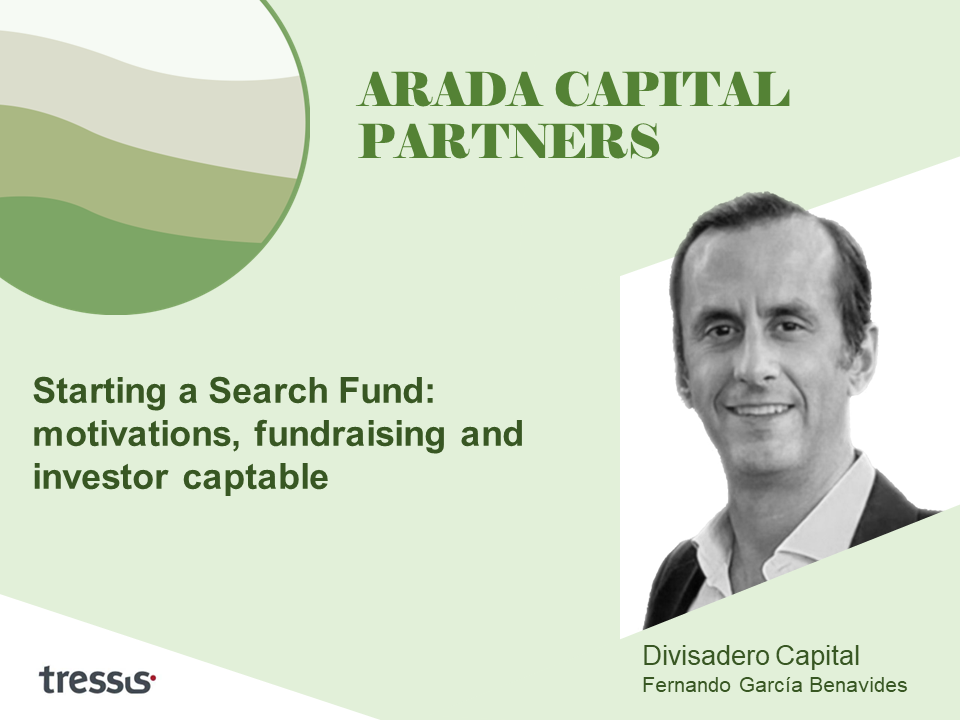
Fernando García Benavides on the groundwork that has to happen before the PPM, and on how he thought about assembling the right group of investors rather than simply the available one.
What are the right motivations for launching a search fund?
Fernando: A trifecta of ambition, curiosity and a keen interest in operational leadership. First, the ambition to run a business — not to start from scratch but to steer an existing entity to new heights, blending entrepreneurial spirit with practical execution.
Second, curiosity. You are diving into established businesses, industries, perhaps markets you are not initially familiar with. That demands a voracious appetite for learning and the ability to adapt quickly.
Third, a genuine interest in fostering a positive organisational culture and building strong teams. The success of a search fund often hinges on the ability to inspire and lead a team effectively.
My own path was driven primarily by the sense of ownership a search fund brings. It offers more than equity — it is about being in charge from start to finish, leading the project and making the key decisions. I also recognised that my growth has come mostly from pushing myself into new and challenging environments. Leading multidisciplinary teams is where I found my true calling.
How did you approach fundraising?
F: It requires thorough preparation and a clear strategy. The first step is to gain a deep understanding of the model — its structure, incentives, and the nuances of what works and what does not. You need to determine honestly whether this path aligns with your commitment and career goals, given the real risk of failure.
There are many resources available. I would particularly highlight searchfunder.com and, of course, the Stanford Search Fund Primer. A few podcasts provide valuable insight into the practical side — I particularly like Search Funded and In the Trenches.
Another useful way of becoming comfortable with the model is speaking with as many searchers as you can, both successful and unsuccessful. I am grateful to this community for their candid advice throughout my research.
Only after that groundwork did I begin drafting my Private Placement Memorandum. The document is fairly standard, but three sections require thorough attention: the About Me section, where you explain succinctly who you are and what motivates you; the areas of focus, where you expand on the verticals that appeal to you; and the costs section, where you think about how you will invest the funds during the search.
What helped most, and what were the main challenges?
F: I was fortunate to have the guidance of a couple of mentors, and I strongly recommend anyone on this path to seek them out. Following their recommendation I spoke with as many searchers as possible, local and international. Although every search is unique, I found patterns that helped me approach fundraising with confidence.
Common hurdles include aligning investor expectations with the realities of the model, navigating a competitive funding landscape, and communicating your value proposition in a crowded market. Preparation turned those into manageable aspects of the process.
What were you looking for in your cap table?
F: Every searcher's journey is unique, and a cap table that suits one may not suit another. For me there were three key aspects: geography, background and personal fit.
On geography, I sought a mix: local investors well versed in the Spanish ecosystem, American investors with the tenure of having seen it all, and other international investors across different markets and cultures.
On background, I looked for investors with a strong financial background to complement my operational expertise, and former searchers who have lived through the process and can add value when facing uncertainty.
Finally, personal fit was paramount. The right fit means investors who are not just funding sources but true partners. On this note, Arada stands out as a significant investor, closely aligned with my criteria — global perspective with local knowledge, diverse industry background, and strong financial expertise.
What strategy will you pursue during the search?
F: Meticulous market analysis and targeted company evaluations, prioritising businesses that fit the thesis and have potential for significant value creation. Efficiency matters, so I am leveraging technology and a data-driven approach, and building a team of interns I can mentor through one of their first real workplace experiences.
On investor relations, transparency and regular communication are the pillars. Regular updates build trust and allow for valuable input, leveraging investors' expertise.